Source commercial power sequencer for venues, studios, and events
Find 30 commercial power sequencer options from verified suppliers in Guangdong, China. Compare models like the 10CH and 12CH power controllers with varying channel counts, power ratings, and dimensions to match your audio system needs.
Key considerations
Products List
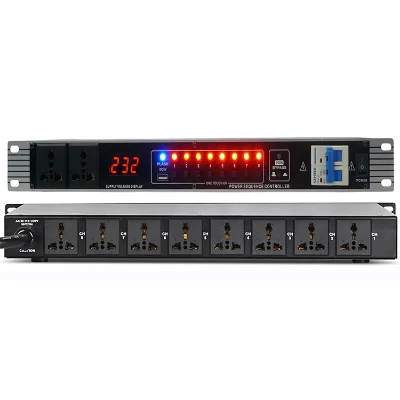
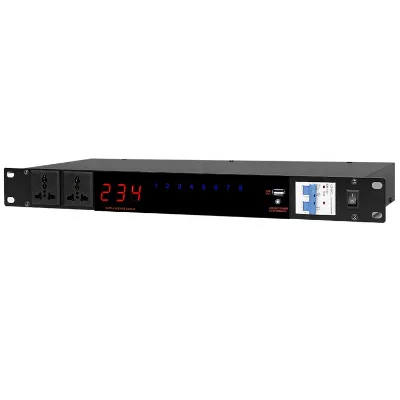
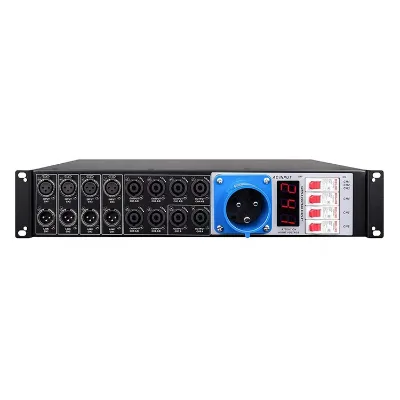
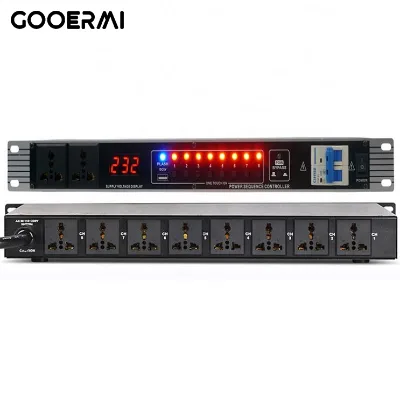
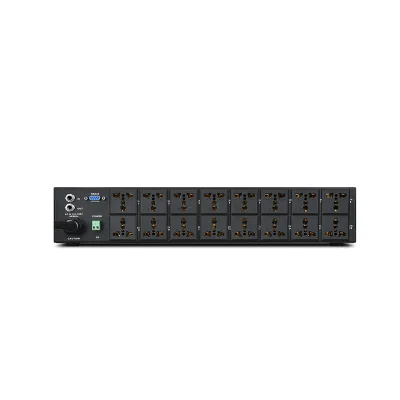
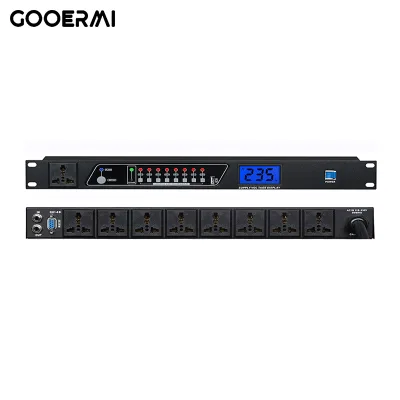
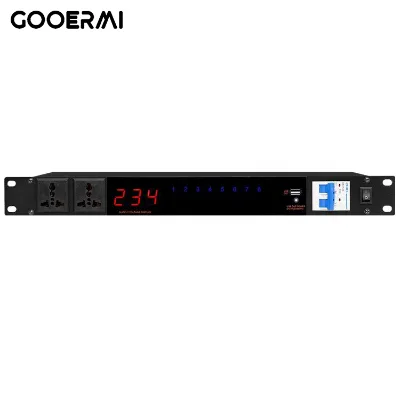
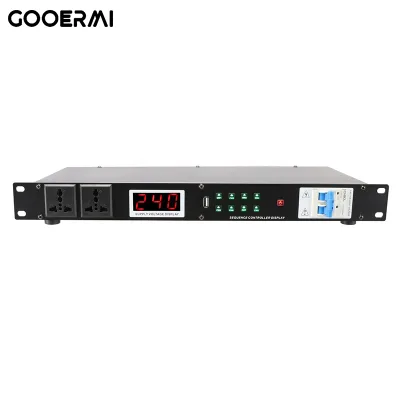
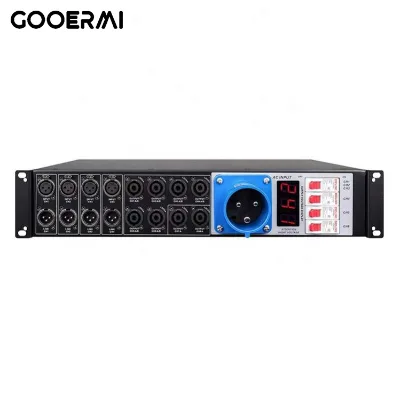
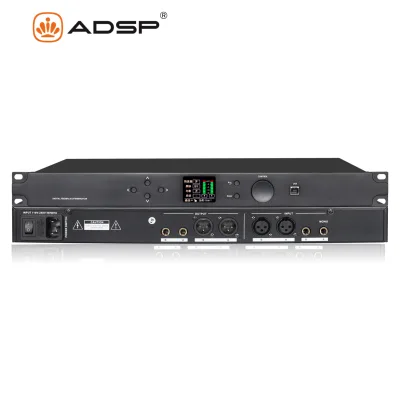
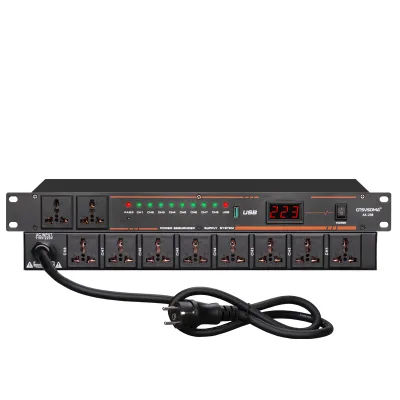


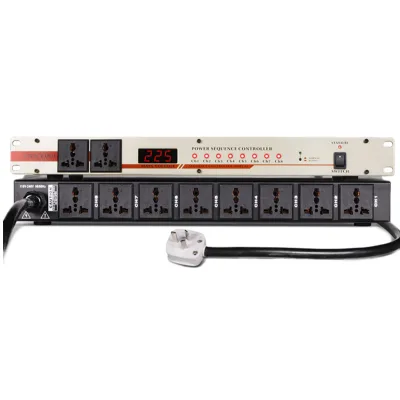


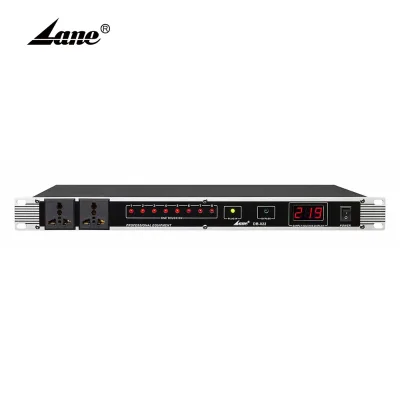
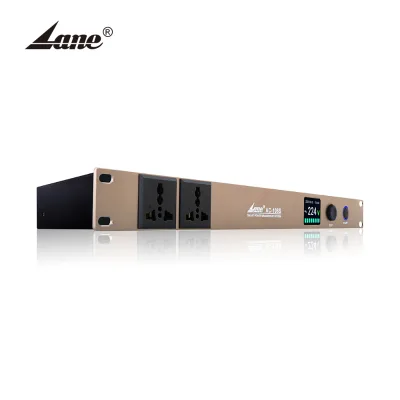


Comprehensive Sourcing Guide
Strategic Sourcing Guide for Commercial Power Sequencers
Understanding the Core Product and Technical Variations
Commercial power sequencers are essential components in professional audio and lighting installations, designed to manage the startup and shutdown order of multiple devices to prevent power surges and equipment damage. When sourcing these units, buyers must first distinguish between different channel configurations and control logic. The market offers a variety of models, ranging from 10-channel units to more complex 12-channel systems. For instance, specific product listings identify a "10CH Power Controller" and a "12 CH Power Controller," indicating that channel count is a primary differentiator. The physical form factor also varies significantly; observed specifications include dimensions such as 56.2 x 27.4 x 45 cm for certain 10-channel models, while others, like the "LAS4+8" or "R-16" variants, present different package sizes, such as 54.3 x 53.3 x 32 cm or 480 x 280 x 90 mm.
The internal architecture and material composition are critical for durability in commercial environments. Most observed units feature a metal construction, which provides necessary shielding and heat dissipation. The exterior finish is typically available in black or silvery colors, catering to standard rack-mount aesthetics. A key technical attribute to verify is the output relay contact current capacity. High-performance units may support up to 30A at 277VAC, ensuring they can handle the inrush current of large amplifiers or lighting rigs without failure. Additionally, the switching mechanism is often a push-button tact switch, allowing for manual override or immediate activation. Buyers should also note the interval settings; some models offer a fixed 1-second interval between each switch, which is crucial for protecting sensitive components from simultaneous power application.
Compliance, Certification, and Safety Standards
In the commercial sector, compliance with safety and electrical standards is non-negotiable. While specific certification marks were not universally listed in the observed data, buyers must rigorously verify that any supplier can provide documentation for relevant international standards. The place of origin for many of these units is Guangdong, China, a major manufacturing hub, but this does not guarantee compliance. Buyers should explicitly request evidence of testing against standards such as IEC 60950 for information technology equipment or IEC 60065 for audio, video, and similar electronic apparatus.
The warranty period is another indicator of a supplier's confidence in their product's compliance and longevity. A standard offering observed in the market is a 1-year warranty. However, for large-scale commercial deployments, buyers should negotiate extended terms or require proof of compliance with local electrical codes in the destination country. The "frequency response rate" of 40Hz to 15KHz or "20Hz-20KHz" found in some listings pertains to audio processing capabilities in sequencers that integrate signal routing, but for pure power sequencing, the focus must remain on electrical isolation and surge protection ratings. Buyers must ensure that the "SNR" (Signal-to-Noise Ratio) of 97dB, if applicable to audio-integrated models, does not compromise the electrical isolation required for power safety.
Cost Drivers and Pricing Dynamics
The pricing of commercial power sequencers is influenced by several factors, including channel count, build quality, and included features. The observed price range in the market spans from 10 USD to 9999 USD, reflecting a vast disparity between basic entry-level units and high-end, feature-rich commercial systems. A unit with a "Power" rating of 1000W/6000W or 2000/6000W will naturally command a higher price than a basic 10-channel controller. The Single Gross Weight is also a significant cost driver; heavier units, such as those weighing 15.000 kg or 16.000 kg, typically utilize more robust metal enclosures and higher-grade transformers or relays, increasing material and shipping costs.
Minimum Order Quantity (MOQ) is another critical financial consideration. The observed MOQ range is 1 to 500 units. For small projects or replacement parts, an MOQ of 1 is ideal, allowing for cost-effective procurement of single items. However, for large-scale commercial installations, buyers may need to negotiate MOQs closer to 500 to secure volume discounts. The "Selling Units" designation of "Single item" suggests that many suppliers are willing to sell individual units, but bulk pricing structures may apply for larger orders. Buyers should also consider the "Single package size" when calculating logistics costs; larger dimensions, such as 57 x 38 x 11 cm or 48 x 28 x 90 cm, will impact freight charges and warehouse storage requirements.
Typical Applications and Integration Scenarios
Commercial power sequencers are primarily deployed in environments where the sequential activation of high-power devices is necessary to prevent tripping circuit breakers or damaging equipment. Common applications include professional audio venues, recording studios, broadcast facilities, and large-scale stage productions. In a live sound setup, a 10-channel or 12-channel sequencer ensures that amplifiers, mixers, and lighting consoles power up in a specific order, typically starting with low-power signal processing units before engaging high-power amplifiers.
The "Adjustable Voice" feature observed in some models suggests advanced integration capabilities, possibly allowing for voice prompts or status updates, which can be beneficial in complex control rooms. The "Output" specifications, such as 775V, 0dB, XLR and phone jack, indicate that some sequencers may also function as audio signal processors or distribution units, blurring the line between power management and signal routing. For these multi-functional units, the "Frequency Range" of 20Hz-20KHz becomes a relevant specification for audio fidelity. Buyers must match the "Output relay contact current" of 30A 277VAC to the total load of their connected devices to ensure safe operation.
Supplier Evaluation and Brand Verification
When evaluating potential suppliers, buyers should look beyond the brand name. The market data shows a mix of OEM (Original Equipment Manufacturer) products and branded items such as "senmi" or "Lucky Tone." The presence of OEM branding often indicates that the product is manufactured by a third party and rebranded, which can be a cost-effective strategy but requires careful vetting of the actual factory. Buyers should verify the "private mold" status; a "No" designation implies the use of standard, off-the-shelf tooling, which may limit customization options but ensures consistency.
The "Model Number" is a critical identifier for due diligence. Specific models like "SR-828," "PS-D1300A," "LAS4+8," "R-16," and "KSP-808" represent distinct product lines with varying capabilities. Buyers should request datasheets for these specific model numbers to confirm technical details. It is also essential to verify the "Brand Name" consistency; some listings show "Lucky Tone or OEM," indicating potential variability in the supply chain. Buyers should prioritize suppliers who provide clear, consistent documentation for their specific model numbers and can demonstrate a track record of supplying commercial-grade equipment.
Quality Control and Long-Term Procurement
Ensuring long-term reliability requires a robust quality control (QC) strategy. Given the heavy usage in commercial settings, the "Single gross weight" and "Material" (Metal) are indicators of build quality, but they must be backed by rigorous testing. Buyers should implement incoming quality inspections that verify the physical dimensions, such as the 480x280x90mm or 56.227.445cm specifications, to ensure the units fit standard rack mounts. The "Interval / time of each switch" of 1 second should be tested to confirm it meets the required delay for the specific application.
For long-term procurement, the "Warranty" of 1 Year is a baseline. Buyers should negotiate terms that include on-site support or rapid replacement for commercial clients where downtime is costly. The "Number of devices supported" being listed as "1" in some contexts may refer to a specific control module, but in a broader context, the sequencer should support the full load of the installation. Buyers should also consider the "Power" ratings, ensuring that the unit can handle the peak loads of 6000W or higher without overheating. Finally, the "Frequency Response Rate" and "SNR" should be verified against the specific audio requirements of the venue to ensure that any integrated signal processing does not degrade the system performance.
Comparison of Key Specifications
To assist in the decision-making process, the following table summarizes the observed variations in key specifications for commercial power sequencers. This comparison highlights the diversity in the market and the need for precise specification matching.
| Specification Category | Variant A (10CH) | Variant B (12CH) | Variant C (LAS4+8) | Variant D (R-16) |
|---|---|---|---|---|
| Product Name | 10CH Power Controller | 12 CH Power Controller | LAS4+8 | R-16 |
| Model Number | SR-828 | PS-D1300A | LAS4+8 | R-16 |
| Channel Count | 10 | 12 | 4+8 (Total 12) | 8 |
| Dimensions (L x W x H) | 56.2 x 27.4 x 45 cm | 54.3 x 53.3 x 32 cm | 480 x 280 x 90 mm | 480 x 245 x 50 mm |
| Single Gross Weight | 15.000 kg | 16.000 kg | 10.000 kg | 13.000 kg |
| Material | Metal | Metal | Metal | Metal |
| Color | Black/Silvery | Black | Black | Black |
| Output Relay Current | 30A 277VAC | 30A 277VAC | 30A 277VAC | 30A 277VAC |
| Switch Interval | 1s | 1s | 1s | 1s |
| Warranty | 1 Year | 1 Year | 1 Year | 1 Year |
| Brand | OEM | OEM | senmi | Lucky Tone or OEM |
This table illustrates that while the core function remains consistent, the physical footprint, weight, and specific model numbers vary significantly. Buyers must align these physical attributes with their rack space constraints and weight limits. The consistent "30A 277VAC" rating across variants suggests a standard high-capacity relay design, but the "Power" ratings of 1000W/6000W or 2000/6000W indicate different internal power handling capabilities that must be matched to the load.
Final Procurement Considerations
The procurement of commercial power sequencers requires a balanced approach that weighs technical specifications against cost and supplier reliability. The wide price range of 10 to 9999 USD necessitates a clear definition of project requirements before engaging with suppliers. Buyers should prioritize units with verified metal construction, appropriate channel counts, and reliable 1-year warranties. The "place of origin" in Guangdong, China, is common, but the "private mold" status and brand consistency are key indicators of quality. By focusing on the specific model numbers like SR-828 or PS-D1300A and verifying the "Single package size" and "Single gross weight," buyers can ensure that the selected equipment fits their logistical and operational needs. Ultimately, the goal is to secure a reliable power management solution that protects expensive audio and lighting investments through precise, sequential power control.
FAQs
What is the typical channel count for commercial power sequencers?
Commercial power sequencers typically come in 10-channel or 12-channel configurations. Specific models like the SR-828 offer 10 channels, while the PS-D1300A provides 12 channels to manage startup sequences for multiple devices.
How much weight should I expect for a single unit?
Single gross weights vary significantly between models, ranging from 3.8 kg to 16 kg. Heavier units like the 10CH Power Controller often weigh 15 kg due to robust metal construction and internal components.
Which material is used for the product enclosure?
Most commercial power sequencers utilize metal for their enclosure material. This design ensures necessary shielding and heat dissipation required for durability in professional audio and lighting installations.
Can I find units with a 1-second switch interval?
Yes, many models feature a fixed 1-second interval between each switch. This timing is crucial for protecting sensitive components from simultaneous power application during the startup sequence.
What is the warranty period for these devices?
A standard warranty period observed in the market is 1 year. This baseline coverage indicates supplier confidence, though extended terms may be negotiable for large-scale commercial deployments.
What is the maximum output relay contact current capacity?
High-performance units support an output relay contact current of 30A at 277VAC. This capacity ensures the sequencer can handle the inrush current of large amplifiers or lighting rigs without failure.
Where are these products typically manufactured?
The place of origin for many of these units is Guangdong, China. This region is a major manufacturing hub, but buyers must verify specific compliance and quality standards regardless of location.